Saffron in Perfumery
Saffron is one of perfumery’s most distinctive spicy materials.
Obtained from the dried stigmas of Crocus sativus, its aromatic character can feel dry, warm, leathery, slightly bitter and subtly floral, with a particular metallic or hay-like nuance.
In composition, saffron can create very different effects. It can sharpen rose, reinforce leather, introduce dryness into amber, or create contrast with oud and sandalwood.
Its interest to the perfumer lies less in its reputation as a precious spice than in the unusual character it brings to a formula.
Harvesting Saffron
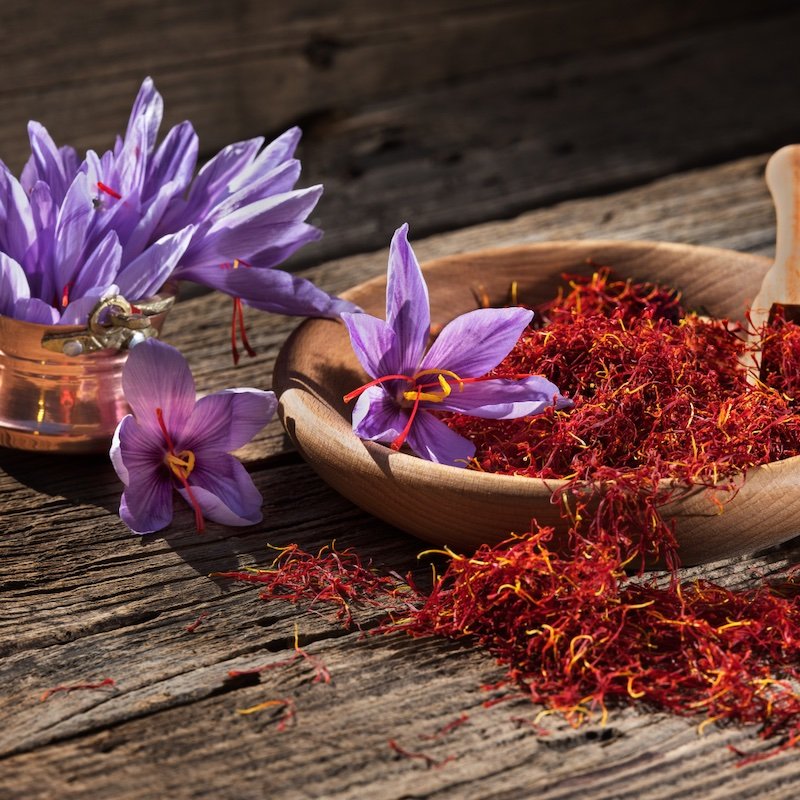
Saffron is obtained from the red stigmas of Crocus sativus.
Each flower produces only a small number of stigmas, which are harvested by hand and then carefully dried. This low yield and labour-intensive process help explain the material’s high value.
For perfumery, however, the interest of saffron lies in its aromatic profile rather than its price. Its characteristic scent is strongly associated with safranal, alongside other compounds that contribute to its bitter, warm and distinctive character.
Cultivation Regions
Saffron is cultivated in several regions with dry climates and pronounced seasonal variation.
Iran is the world’s principal producer and remains the dominant source of saffron internationally.
Kashmir, India has a long and distinctive saffron tradition, particularly around Pampore. Kashmir saffron is also protected in India through Geographical Indication status.
Saffron is also cultivated in countries such as Spain, Greece and Afghanistan, each with its own agricultural traditions and production characteristics.
As with other natural materials, origin can influence quality and character, but the final aromatic profile also depends on harvest, drying, storage and processing.
What Does Saffron Smell Like?
Saffron has an unusual aromatic profile that combines warmth with dryness.
Spicy: warm and distinctive, but different from the heat of pepper or cinnamon.
Hay-like: dry, slightly grassy nuances are characteristic of the material.
Floral: subtle floral facets soften its drier character.
Metallic: saffron can reveal an unusual mineral or slightly metallic impression.
Bitter and Aromatic: a dry bitterness gives the material tension and prevents it from feeling simply sweet.
Safranal is one of the principal compounds associated with saffron’s characteristic aroma, although the scent results from a broader combination of volatile materials.
In perfumery, the idea of saffron can also be developed toward leathery, woody or ambered effects depending on the materials surrounding it.
This complexity makes saffron particularly effective in compositions built around rose, leather, oud, sandalwood and amber.
Saffron as a Perfumery Material
The aromatic character of saffron comes from volatile compounds present in the dried stigmas of Crocus sativus, with safranal playing a particularly important role in its recognizable scent.
There is no single extraction method that defines saffron as a perfumery material. Its aromatic compounds can be isolated through different techniques, including distillation, solvent extraction and other forms of extraction, each capturing the material somewhat differently.
For the perfumer, saffron can therefore be approached through natural extracts as well as through the individual aromatic facets that define its character.
What matters ultimately is the effect within the composition: the dry warmth, bitterness and distinctive tension that saffron can bring to flowers, woods, leather, amber and oud.
Saffron’s Role in Perfumery
Saffron can play very different roles depending on the composition and the way its character is developed.
With rose and other flowers, its dry warmth can create contrast and sharpen the floral structure.
Alongside leather, saffron can reinforce dry, slightly bitter and textured facets.
With oud and sandalwood, it can introduce tension between spice and wood, while in amber compositions it can add warmth without necessarily making the perfume sweeter.
Saffron may appear prominently or remain as a supporting element. Its role is determined by the composition rather than by a fixed position as a top, heart or base note.
Saffron at Maison Anthony Marmin
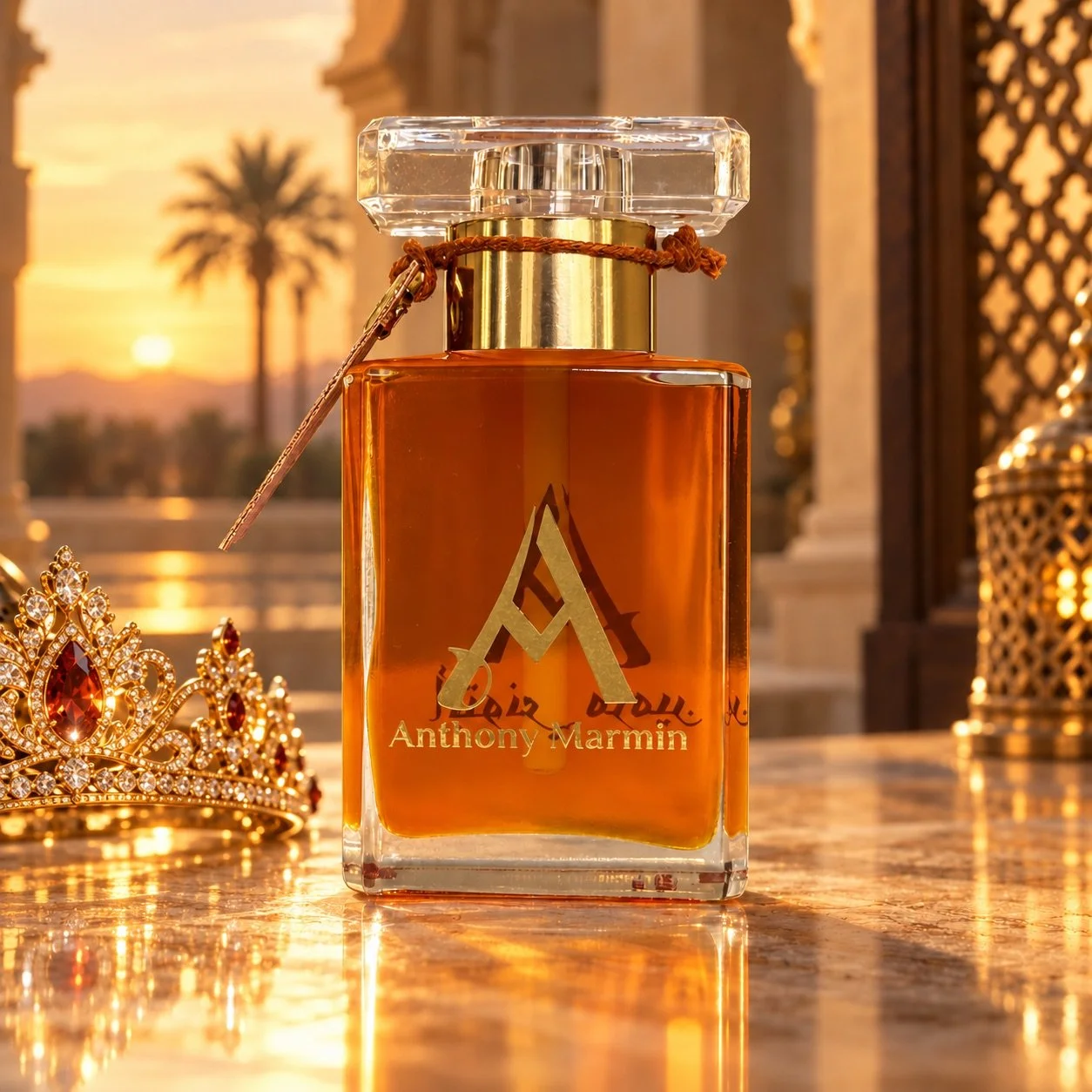
Saffron appears in different forms across the Maison, shaped by the materials surrounding it.
Baghdad
In Baghdad, Persian saffron is paired with Taif rose before the composition develops through caramel, figs, Assam oud and sandalwood.
Here, saffron reinforces the warmth of the rose while introducing dryness and contrast against the sweeter heart and deeper woody base.
Malikat Saba
In Malikat Saba, saffron opens alongside honey and sweet candy before vanilla ice cream and Yemeni bakhoor bring a richer, more gourmand character.
Here, saffron contributes warmth and aromatic tension, balancing the sweetness before the composition settles into Arabian white musk.