
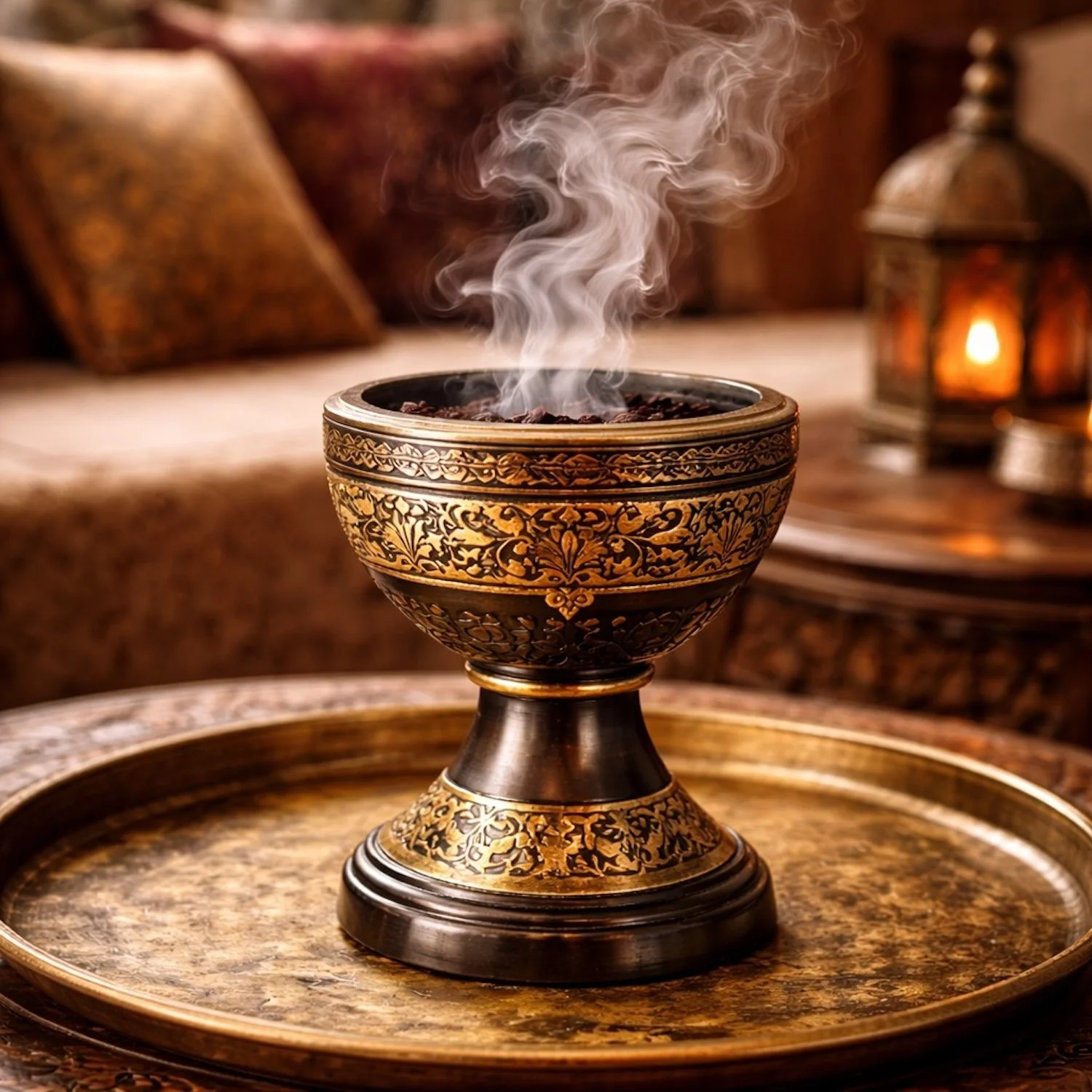
Incense
A ritual of incense, atmosphere, and hospitality.
At the origin of perfumery was smoke.
Wood
Filters
No results found
No results match your search. Try removing a few filters.
About Incense
Incense belongs to the earliest gestures of perfumery. Long before modern formats, fragrant materials were burned to scent spaces, mark hospitality, and shape moments of ritual and atmosphere.
Our selection brings together bakhoor, resins, and wood, three expressions of this ancient world, each offering its own character, texture, and way of perfuming the air.
Bakhoor, Resins, and Wood
Bakhoor is among the most expressive forms of incense, releasing a rich and enveloping scent when gently heated. It is closely tied to traditions of welcome, atmosphere, and the perfuming of garments and interiors.
Resins offer a more raw and elemental experience. Frankincense and other aromatic resins reveal their character through smoke with a purity that feels both ancient and immediate.
Wood brings another dimension, drier, deeper, and more contemplative. It speaks to those who seek a quieter ritual and a more austere beauty.
Other Forms of Incense
The world of incense also extends to other forms, including sticks, cones, and scented woods prepared for burning. Each carries its own customs, gestures, and atmosphere, yet all remain connected by the same essential idea: fragrance released through heat and smoke.