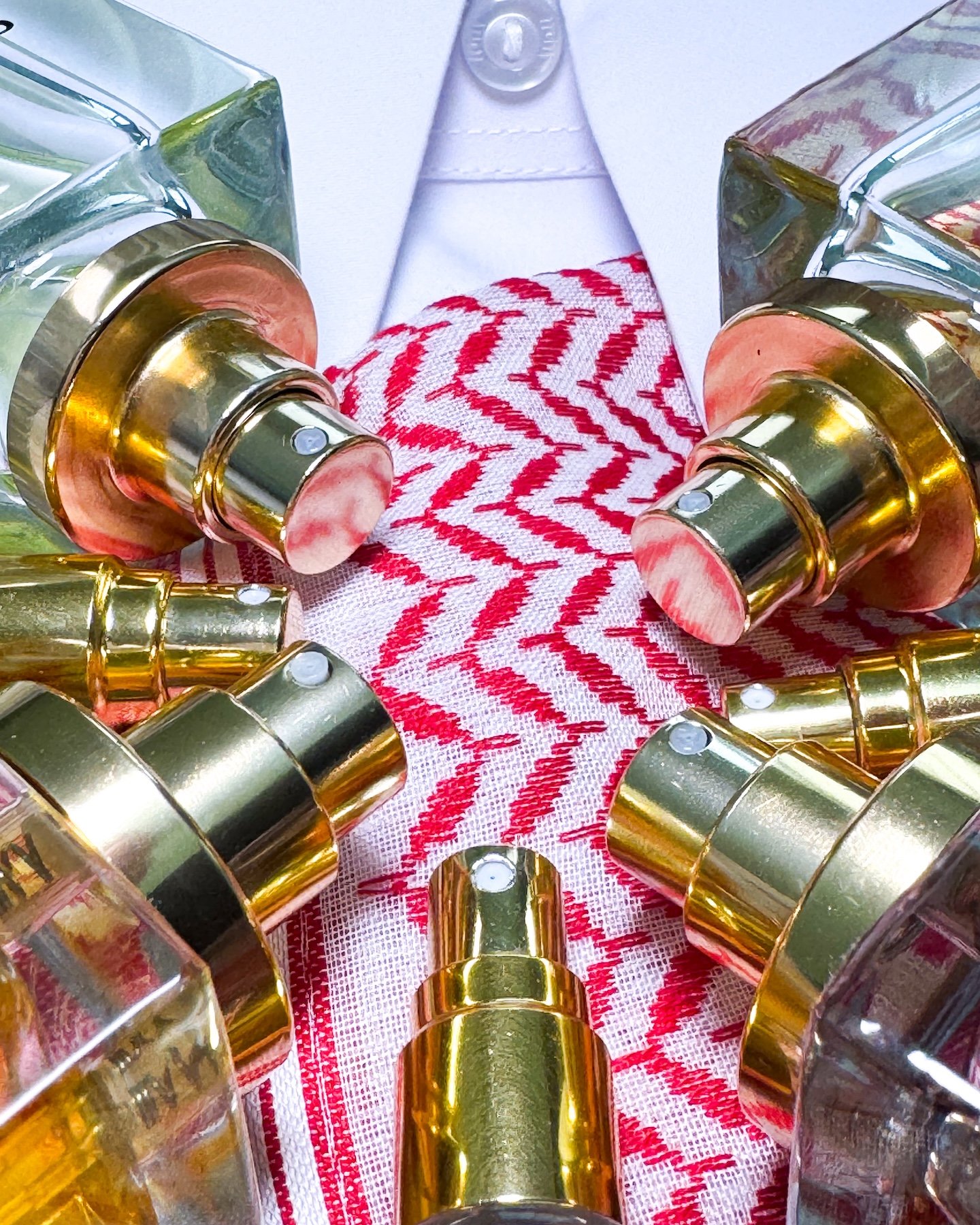
The Art of Applying Perfume
Applying a spray perfume is simple, but a few considered gestures can influence how it is experienced on the skin, clothing and around the wearer.
Skin, temperature, climate and the amount applied can all affect diffusion and longevity. There is no single correct way to wear perfume; the objective is to find an application that suits the composition, the occasion and the presence you want it to have.
Maison Anthony Marmin’s Extraits de Parfum are composed for diffusion while preserving the character of the original compositions. Here are a few principles for wearing them with intention.

Why Technique Matters When Applying Perfume
The way a perfume is applied can influence its diffusion, longevity and the way it is perceived throughout the day.
Skin condition, body temperature, climate and the amount applied all play a role. Warmer areas of the body can encourage diffusion, while moisturized skin may help fragrance remain perceptible for longer.
Environmental conditions also influence how a perfume is experienced: heat generally increases diffusion, while cooler temperatures can make a fragrance feel more restrained.
Application is therefore less about following strict rules and more about adapting the perfume to your skin, surroundings and desired presence.
1. Choose Where You Want the Perfume to Live
Perfume can be applied to different areas of the body depending on the effect you want.
Warmer areas such as the wrists, neck and inside of the elbows can encourage diffusion, while the chest or back of the neck can create a softer presence around the wearer.
There is no need to follow a fixed map. A few well-placed sprays are usually more effective than applying perfume everywhere.
Hold the bottle a short distance from the skin and allow the mist to settle naturally.
2. Let It Settle: No Rubbing
After spraying perfume on the skin, allow it to settle naturally rather than rubbing the area.
Rubbing creates friction and warmth, which can encourage the more volatile facets of the fragrance to evaporate more quickly and change the way the opening is experienced.
Apply, let the perfume dry naturally, and allow the composition to unfold on its own.
3. Clothing Holds Scent, But Choose Wisely
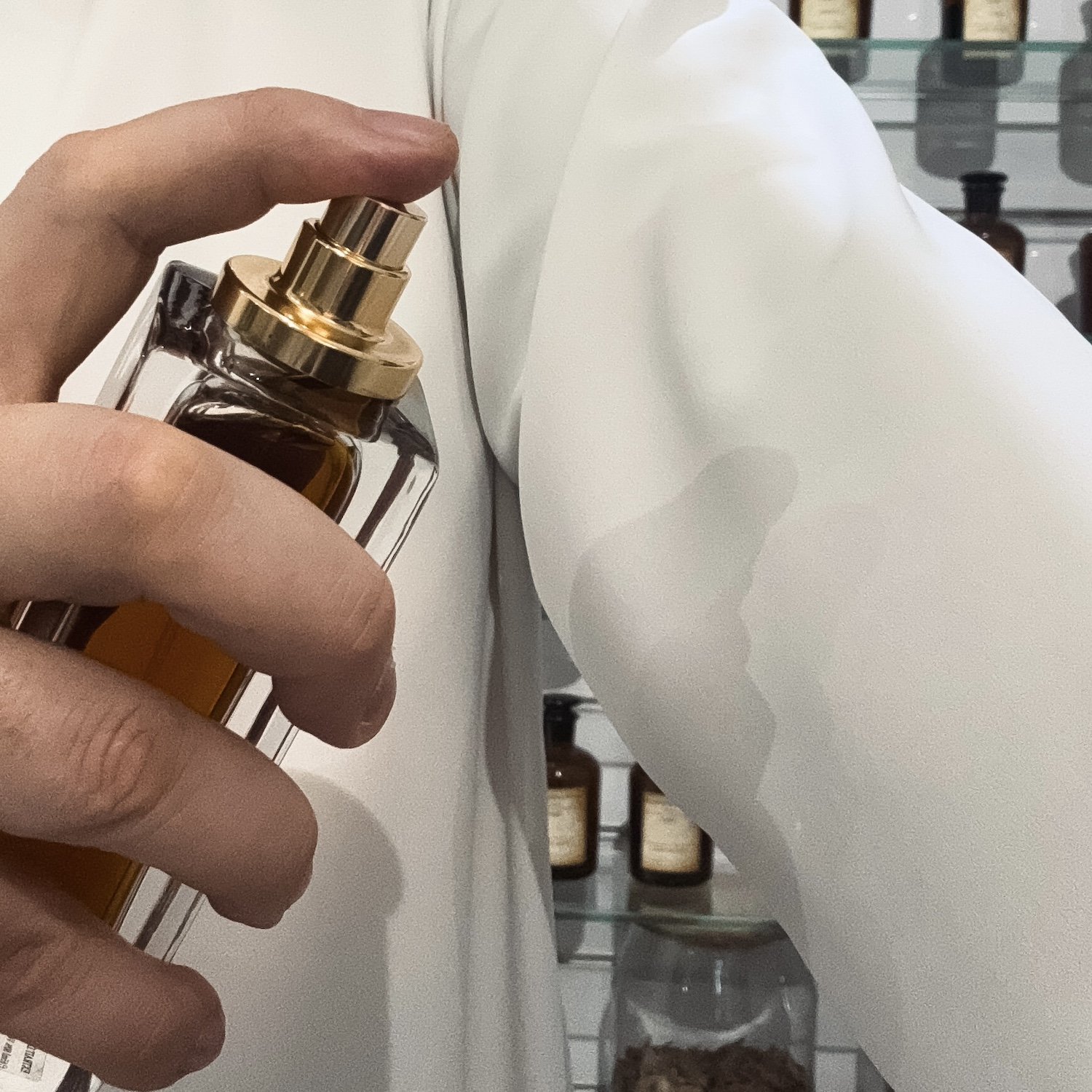
Fabric can retain fragrance for longer than skin, making clothing a useful way to extend the presence of a perfume.
Spray from a distance and test first on an inconspicuous area, particularly with light-coloured or delicate fabrics. Perfume oils, alcohol and certain aromatic materials can leave marks or affect the appearance of some textiles.
Avoid spraying directly onto silk or other delicate materials. When in doubt, apply the perfume to the skin instead.
4. Hair Application (Optional)
Hair can retain fragrance well, but alcohol-based perfume should be used with some restraint, particularly on dry or delicate hair.
For a subtle effect, spray lightly onto a hairbrush before brushing through the lengths, or mist the perfume from a distance rather than applying it directly to the scalp.
A small amount is enough to leave a soft trail as the hair moves.
5. Reapply With Purpose
A well-composed extrait de parfum may remain perceptible for many hours, but longevity varies with the composition, skin and environment.
If you choose to refresh the fragrance during the day, one or two light sprays are usually enough. Reapply where you want the scent to be most present rather than simply increasing the quantity.
The objective is to restore the perfume’s presence, not overwhelm it.
6. Adapt to the Environment
Temperature and climate can influence how a perfume behaves on the skin.
In warm weather, fragrance tends to diffuse more quickly and may feel more intense, so a lighter application can be enough. In cooler conditions, evaporation slows and projection can feel more restrained.
There is no fixed seasonal rule: the amount applied should ultimately reflect the perfume itself, the environment and the presence you want it to have.
7. Store Your Perfume Properly
Light, heat and significant temperature changes can alter a fragrance over time.
Keep the bottle tightly closed and store it in a cool, dry place away from direct sunlight. A drawer, cabinet or its original box is generally preferable to leaving perfume exposed in a bathroom or near a window.
Consistent storage conditions help preserve the character of the composition for longer.
Frequently Asked Questions
How many sprays should I use?
There is no fixed number. For an extrait de parfum, one to three sprays may be sufficient depending on the composition, the occasion and the presence you want to create. Begin lightly and adjust if needed.
Why does my perfume seem to fade quickly?
Longevity varies according to the composition, skin, climate and application. You may also become less aware of a fragrance after wearing it for some time, even while it remains perceptible to others.
Applying perfume to moisturized skin and avoiding excessive heat can help preserve its presence.
Can I layer perfumes?
Yes. Layering can create a more personal expression, but there are no fixed combinations that must be followed.
At Maison Anthony Marmin, we recommend applying perfume oil first as the foundation, followed by a spray perfume for greater diffusion.
Wearing Perfume with Intention
There is no single correct way to wear perfume. Application is part of the experience: how much you apply, where you wear it and how closely you want the fragrance to remain around you.
Whether worn as a concentrated perfume oil or an extrait de parfum, the most considered approach is often the simplest, apply with measure and allow the composition to speak for itself.